

Payment
Application Fee: 105 USD (Taxes Included)
5,040 $ per year
1,800 $ per year
504 $ per year
1,368 $ per year
126 $ per year
University performance analysis
This visual analysis summarizes key academic, research, financial, and global indicators using the official UniEv® evaluation methodology.
The radar analysis highlights Faculty Capacity as a primary strength, reflecting strong alignment with UniEv® academic benchmarks. Conversely, Global Positioning shows relative development potential, indicating a strategic area for improvement to enhance competitiveness, student experience, and long-term global positioning.
Global performance comparison
This comparison reveals how the university aligns with global academic benchmarks. Performance strengths and gaps are highlighted to support informed student decisions and strategic academic positioning.
Tuition value & student diversity
These insights help applicants evaluate academic return on investment and understand the university’s international exposure.
Tuition vs Academic Value
Student profile distribution
Ranking Criteria
UniEv® Rank
UniEv® Global: 984
UniEv® Africa: 47
UniEv® Zambia: 1
UniEv® Lusaka: 1
Accreditation
The University of Zambia (UNZA) is the country’s flagship public university, established in 1965 shortly after Zambia’s independence. Its School of Medicine, founded in 1966, is the oldest and most prestigious medical training institution in Zambia.
The MBChB programme is fully accredited by the Health Professions Council of Zambia and recognized internationally through WDOMS pathways. UNZA has long-standing collaborations with global institutions including universities in the UK, USA, and Europe.
Quality of Education
UNZA follows a British-influenced MBChB curriculum with strong integration of preclinical sciences, clinical medicine, and research. The programme emphasizes internal medicine, surgery, pediatrics, obstetrics and gynecology, and public health.
Academic standards are considered among the highest in Southern Africa, with competitive admission and rigorous assessment systems. English is the official language of instruction.
Clinical Training
Clinical training is conducted primarily at the University Teaching Hospital (UTH) in Lusaka, one of the largest referral hospitals in Southern Africa. Additional training sites include Levy Mwanawasa Hospital, Chainama Hills Hospital, and other specialized centers.
Students undergo extensive rotations in medicine, surgery, pediatrics, obstetrics and gynecology, psychiatry, and community health, with exposure to both urban and rural healthcare systems.
Faculty
UNZA’s School of Medicine includes multiple faculties such as Basic and Clinical Sciences, Public Health, Nursing Sciences, and Pharmacy. Faculty members include highly trained specialists, many with international postgraduate qualifications.
The university also hosts visiting professors and participates in international faculty-exchange programmes.
Research
UNZA is one of Africa’s leading research universities, particularly in infectious diseases such as HIV/AIDS, tuberculosis, malaria, and emerging public-health threats.
The institution collaborates with global organizations including NIH, WHO, and major research universities. Research output is strong in epidemiology, clinical medicine, and public health.
Rankings
UNZA consistently ranks as the top university in Zambia and is among the more established universities in Southern Africa. Its medical school is widely respected regionally and internationally.
Tuition
Medicine tuition is moderate compared with international medical schools but higher than many African public universities. The cost reflects the university’s strong infrastructure and clinical training systems.
Cost of Living
Lusaka offers moderate living costs relative to other African capitals. Accommodation, transport, and daily expenses are manageable, though costs may be higher than in smaller Zambian cities.
Student Life
Student life at UNZA is vibrant and diverse, with students from across Africa and beyond. Medical students engage in academic societies, clinical clubs, research projects, and community-health outreach.
The university also offers sports, cultural activities, and student organizations that contribute to a well-rounded academic experience.
Facilities
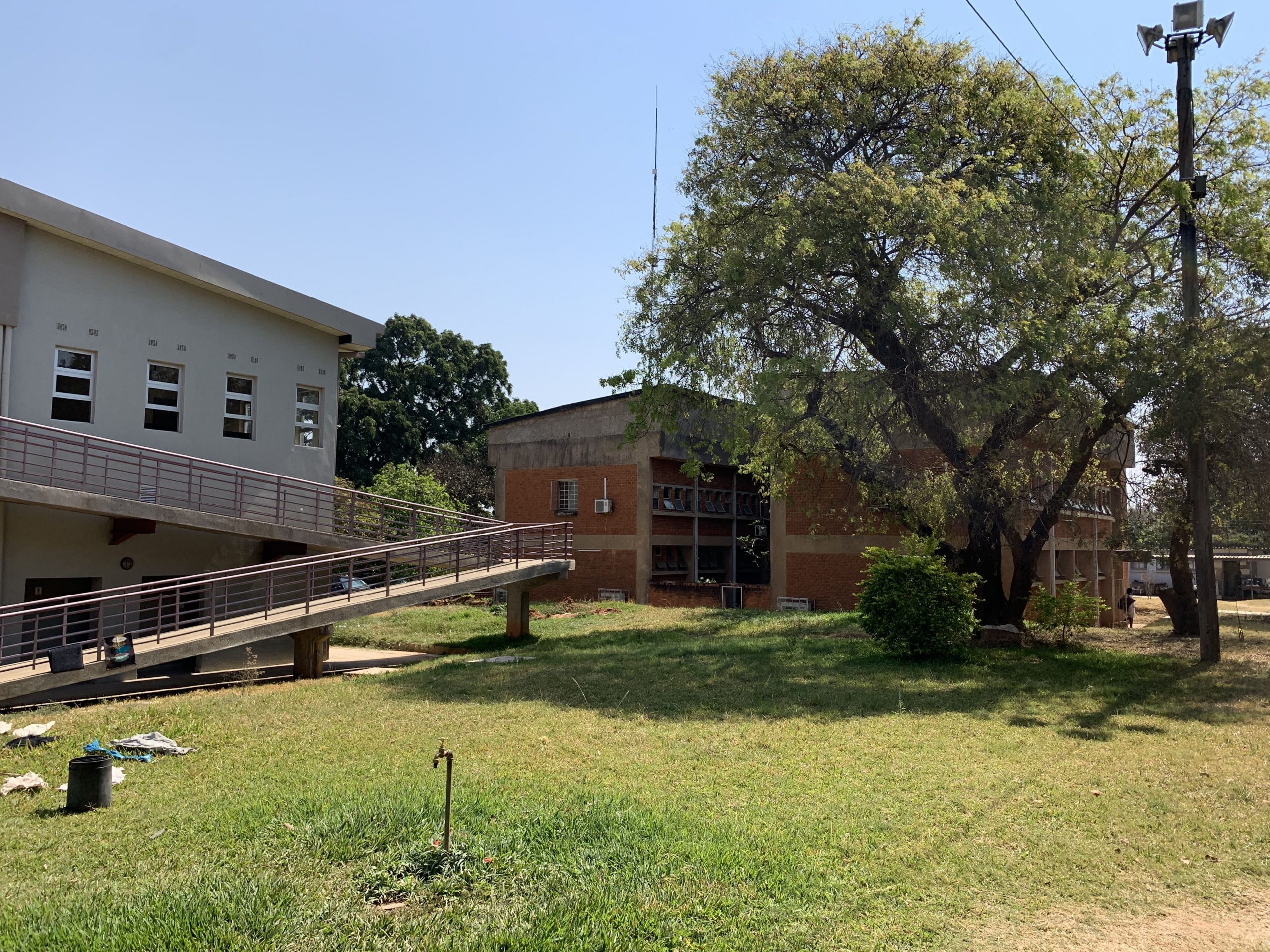
Facilities include advanced laboratories, lecture halls, simulation centers, libraries, and major teaching hospitals. The Ridgeway Campus is specifically dedicated to health sciences and medical training.
UNZA continues to expand its infrastructure with modern research and clinical-training facilities.
Graduate Outcomes
UNZA graduates are highly employable and widely recognized across Africa and internationally. Many graduates pursue postgraduate specialization in the UK, South Africa, and other global centers.
The university has produced a large proportion of Zambia’s doctors, specialists, and healthcare leaders.
Admission Criteria
Admission into the MBChB programme is highly competitive and requires excellent performance in secondary-school sciences (biology, chemistry, physics), along with strong overall academic results.
International students must meet equivalent qualifications and English-language requirements.
Location
UNZA is located in Lusaka, the capital city of Zambia. The School of Medicine operates primarily from the Ridgeway Campus near the University Teaching Hospital.
Data Transparency
University of Zambia (UNZA) – School of Medicine is initially compliant with UniEv® Ranking standards, with annual data verification ensuring transparency, accuracy, and accountability.
 61
Years
University of Zambia
1965 — 2026
Important Statistics
61
Years
University of Zambia
1965 — 2026
Important Statistics

Comments are closed.