1
1



University of Oxford is accredited by the UK GMC. Its BM BCh degree is internationally recognized, allowing graduates to pursue licensing and residency opportunities worldwide.

Harvard Medical School is fully accredited by the LCME and recognized globally as the leading medical institution. Graduates are eligible for USMLE and licensure worldwide.

UCSF School of Medicine is fully accredited by the LCME and globally recognized, ensuring eligibility for USMLE and international medical licensure.

Stanford University School of Medicine is fully accredited by the LCME and globally recognized, ensuring eligibility for USMLE and international medical licensure.

Perelman School of Medicine at the University of Pennsylvania is fully accredited by the LCME and globally recognized, ensuring eligibility for USMLE and international medical licensure.

University of Cambridge is accredited by the UK GMC. Its MB BChir degree is internationally recognized, allowing graduates to pursue licensing and residency opportunities worldwide.

NYU Grossman School of Medicine is fully accredited by the LCME and globally recognized, ensuring eligibility for USMLE and international medical licensure.

Imperial College London is accredited by the UK GMC. Its MBBS degree is internationally recognized, allowing graduates to pursue licensing and residency opportunities worldwide.

The Yong Loo Lin School of Medicine at NUS is accredited by Singapore’s Ministry of Education and recognized globally by major medical regulatory bodies. It meets international standards required for global medical practice and licensing.

University College London is accredited by the UK GMC. Its MBBS degree is internationally recognized, allowing graduates to pursue licensing and residency opportunities worldwide.

Karolinska Institute is accredited under Swedish and EU systems. Its MD degree is internationally recognized, allowing graduates to pursue licensing and residency opportunities worldwide.
The University of Melbourne is Australia’s leading public research university, founded in 1853 and regulated by TEQSA. Melbourne Medical School’s Doctor of Medicine (MD) program is fully accredited by the Australian Medical Council (AMC), allowing graduates to enter internship training across Australia.

Tsinghua Medicine is globally recognized and integrated with elite Chinese medical institutions, including collaboration with Peking Union Medical College (PUMC) for MD training.

Lee Kong Chian School of Medicine operates under Singapore’s Ministry of Education and meets international medical education standards. The program is globally recognized and aligned with major medical regulatory bodies.
The University of Sydney is Australia’s oldest university, founded in 1850, and operates as a public institution regulated by TEQSA. Sydney Medical School’s Doctor of Medicine (MD) program is fully accredited by the Australian Medical Council (AMC), enabling graduates to enter internship training in Australia.

The University of Tokyo is Japan’s most prestigious national university, accredited by the Ministry of Education (MEXT) and major accreditation bodies such as JUAA and NIAD-UE. Its medical degree is globally recognized and considered among the most prestigious worldwide.
The University of New South Wales (UNSW Sydney) is a public research university established in 1949 and regulated by TEQSA. The Doctor of Medicine (MD) program delivered by the Faculty of Medicine & Health is fully accredited by the Australian Medical Council (AMC), enabling graduates to undertake internship training in Australia.

Weill Cornell Medicine – Qatar is an overseas campus of Weill Cornell Medicine in New York and is fully accredited by the LCME. Degrees awarded are identical to those granted in the United States.

The Australian National University (ANU) is a public research-intensive institution founded in 1946 and regulated by TEQSA. The ANU Medical School’s Doctor of Medicine (MD) program is fully accredited by the Australian Medical Council (AMC), allowing graduates to enter internship training in Australia.

The University of Queensland (UQ) is a public research university founded in 1909 and regulated by TEQSA. Its Doctor of Medicine (MD) program is fully accredited by the Australian Medical Council (AMC), allowing graduates to proceed to internship training in Australia.
The University of Buenos Aires (UBA) is Argentina’s flagship public university founded in 1821. Public undergraduate programs—including Medicine, Dentistry, Pharmacy, Nursing, and allied health fields—are tuition-free for both local and international students, with only a small administrative fee sometimes charged per term for international enrollments.

Universidade de São Paulo (USP) is a federally recognized public university accredited by Brazil’s Ministry of Education (MEC). The Faculty of Medicine is one of the most prestigious medical schools in Latin America and fully complies with national and international academic standards for medical education.

Pontificia Universidad Católica de Chile is accredited by Chile’s National Accreditation Commission (CNA Chile). The Faculty of Medicine meets national academic and professional standards required for medical licensing in Chile and maintains strong institutional oversight aligned with national higher education regulations.

The University of Cape Town is fully accredited by South African medical authorities and internationally recognized bodies. Its MBChB program meets global standards, enabling graduates to pursue licensure in multiple countries after passing relevant exams such as PLAB or USMLE.

Universidad de Chile is fully accredited by the National Accreditation Commission (CNA Chile). The Faculty of Medicine complies with Chilean medical education standards and is authorized to grant degrees recognized nationally and internationally.

Universidad de los Andes’ Medicine program operates under authorization of Colombia’s Ministry of National Education and maintains high-quality institutional accreditation. The program is listed in international medical directories and follows structured evaluation frameworks to ensure compliance with national and global academic standards in medical education.

The University of the Witwatersrand is accredited by South African regulatory bodies and recognized globally. Its MBChB program meets international standards, enabling graduates to pursue licensing exams such as USMLE, PLAB, and AMC.

Stellenbosch University is accredited by national South African authorities and recognized globally. The MBChB program complies with international medical education standards, allowing graduates to pursue licensure exams such as USMLE, PLAB, and AMC.

The University of Pretoria is accredited by South African regulatory bodies including HPCSA and SAQA, and internationally recognized through WDOMS and ECFMG. Graduates are eligible for global licensing pathways such as PLAB (UK), USMLE (USA), AMC (Australia), DHA (UAE), and SCFHS (Saudi Arabia).

Cairo University Faculty of Medicine (Kasr Al Ainy) is one of the oldest and most prestigious medical schools in the Middle East and Africa. It is fully accredited by Egyptian national authorities and recognized internationally through WHO and WFME frameworks.
Explore the latest developments, insights and perspectives shaping medical education and universities worldwide.
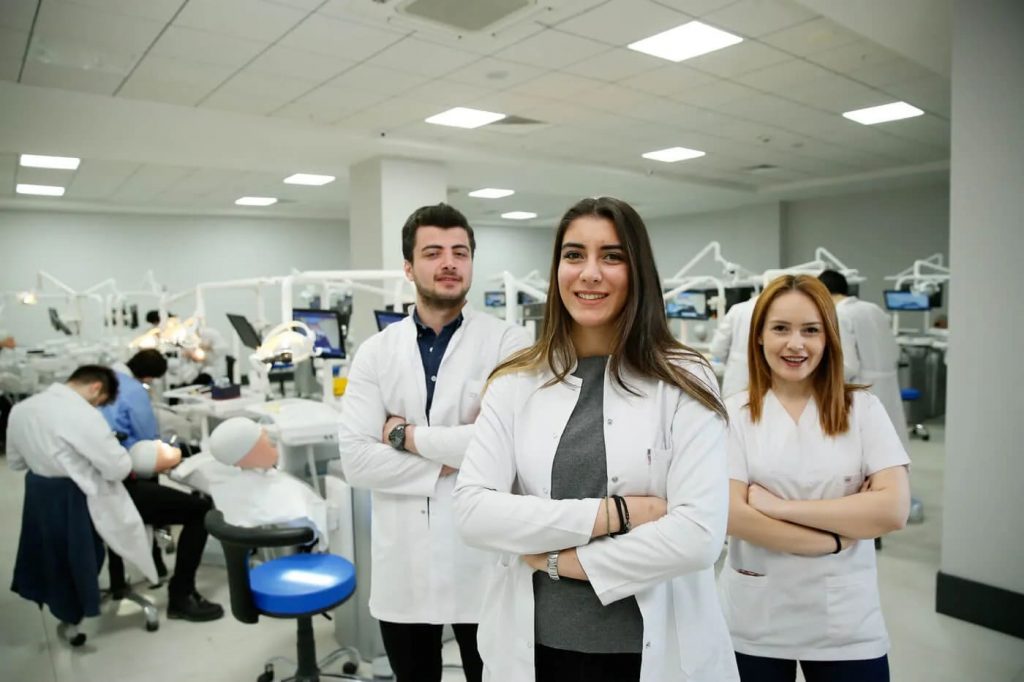 Featured Story
News
Read Story
Choosing a medical school in 2026–2027 is not simply about finding the university with the highest ranking, the lowest tuition, or the most impressive campus. It is a decision that can influence your education, clinical skills, finances, professional network, postgraduate opportunities, licensing pathway, and ultimately the kind of medical career you can build. For international students, the decision becomes even more complex. You may be comparing universities across different countries, educational systems, currencies, languages, admission structures, and medical licensing frameworks. That creates a dangerous temptation: Choose the university that looks best online. Don’t. A medical school’s website is designed to present its strongest side. Rankings measure specific dimensions. Education agents may emphasize convenient admissions. Social media highlights campus life. None of these sources, by themselves, can tell you whether a university is the right medical school for you. The better approach is to compare medical schools systematically. This guide presents 25 factors every student should evaluate before choosing a medical school in 2026–2027, with special attention to international students planning to study medicine abroad. 1. Medical Program Recognition This should be near the top of your list. Before considering tuition, location, accommodation, or student life, verify that the specific medical program is appropriately recognized in its…

