

Payment
Application Fee: 105 USD (Taxes Included)
6,000 $ per year
1,000 $ per year
600 $ per year
1,400 $ per year
150 $ per year

University performance analysis
This visual analysis summarizes key academic, research, financial, and global indicators using the official UniEv® evaluation methodology.
The radar analysis highlights Faculty Capacity as a primary strength, reflecting strong alignment with UniEv® academic benchmarks. Conversely, Global Positioning shows relative development potential, indicating a strategic area for improvement to enhance competitiveness, student experience, and long-term global positioning.
Global performance comparison
This comparison reveals how the university aligns with global academic benchmarks. Performance strengths and gaps are highlighted to support informed student decisions and strategic academic positioning.
Tuition value & student diversity
These insights help applicants evaluate academic return on investment and understand the university’s international exposure.
Tuition vs Academic Value
Student profile distribution
Ranking Criteria
UniEv® Rank
Global: 747
South America: 130
Bolivia: 2
Sucre: 1
1) Accreditation
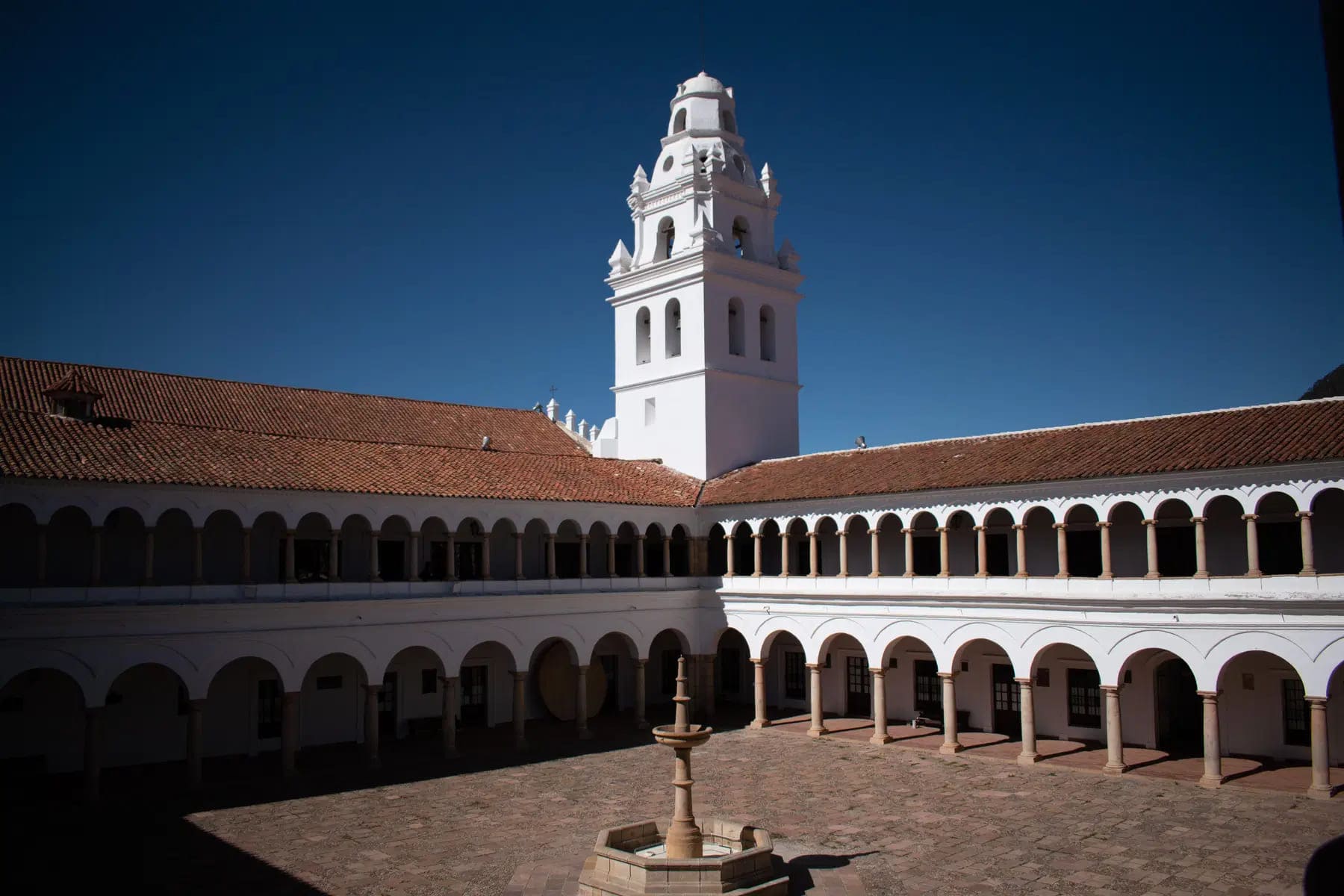
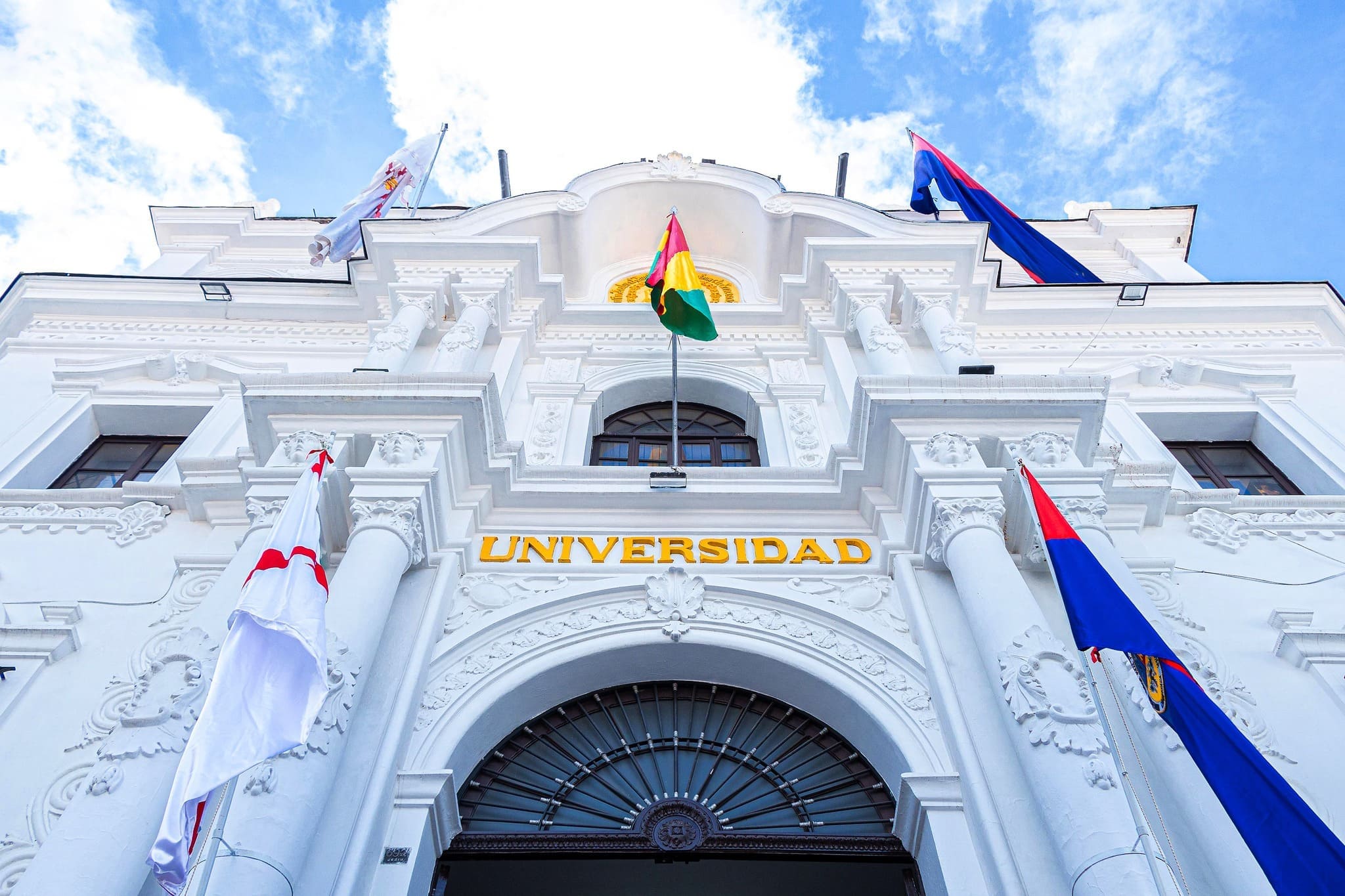
Universidad Mayor, Real y Pontificia de San Francisco Xavier de Chuquisaca (USFX) is accredited by the Bolivian Ministry of Education and is one of the oldest universities in the Americas, founded in 1624. The Faculty of Medicine complies with national academic and professional standards for medical education. The program maintains eligibility for inclusion in international medical directories, enabling graduates to pursue domestic licensure and international credential recognition subject to host-country regulations.
2) Quality of Education
The six-year MD curriculum integrates foundational biomedical sciences with structured clinical immersion. Instruction is delivered in Spanish and emphasizes public health, epidemiology, and hospital-based training. As a historic public institution, USFX benefits from long-standing academic traditions, standardized evaluation systems, and curriculum stability aligned with Bolivia’s national healthcare objectives.
3) Clinical Training
Clinical training is conducted in affiliated public hospitals in Sucre. Students complete rotations in internal medicine, surgery, pediatrics, obstetrics and gynecology, emergency medicine, and other core specialties. The regional healthcare environment provides exposure to both urban and semi-rural patient populations.
4) Faculty
The Faculty of Medicine includes experienced academic professors and practicing clinicians. Many faculty members contribute to both teaching and research activities within Bolivia’s healthcare system. Structured supervision ensures academic continuity and clinical mentorship throughout the program.
5) Research
With approximately 11,000 indexed publications, USFX demonstrates strong research productivity within Bolivia’s public university sector. Research areas include public health, infectious diseases, and applied clinical sciences. Institutional research output has shown steady growth over recent decades.
6) Rankings
With a global ranking of 2200 and consistent local ranking of 2, USFX holds a leading position within Bolivia’s higher education system. Ranking progression reflects historical academic strength and gradual research expansion.
7) Tuition
Tuition fees remain affordable due to public funding support. Annual tuition increases average approximately 1.6%, preserving accessibility for domestic students while supporting institutional development.
8) Cost of Living
Sucre offers moderate living expenses compared to larger Bolivian cities. Medical students typically budget around 500 USD per month to cover accommodation and daily necessities.
9) Student Life
Student life at USFX combines academic rigor with cultural and historical engagement. Medical students often participate in public health initiatives and community outreach programs.
10) Facilities
Facilities include lecture halls, laboratories, and partnerships with regional hospitals. Infrastructure supports both large-scale enrollment and essential clinical training.
11) Graduate Outcomes
Graduates commonly enter Bolivia’s public healthcare system or pursue specialization programs. International practice eligibility depends on credential recognition and licensing examinations abroad.
12) Admission Criteria
Admission requires completion of secondary education and successful entrance examination performance regulated by the public university system. Entry competition is moderate to high depending on annual intake capacity.
13) Location
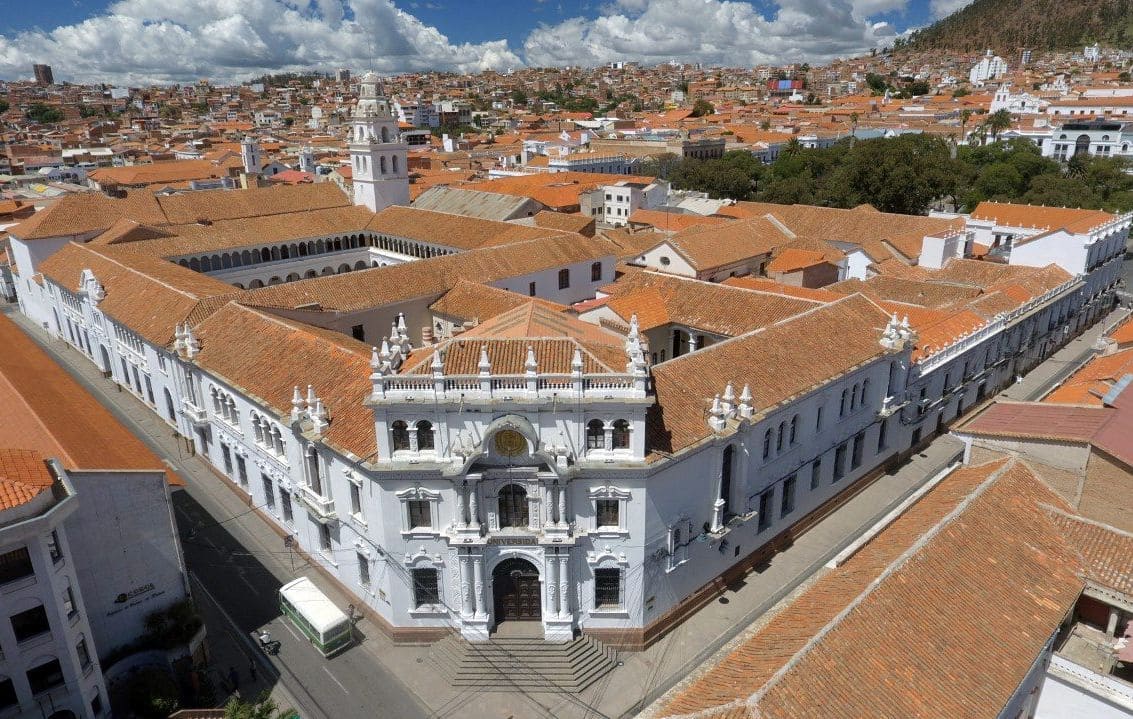
Located in Sucre, Bolivia’s constitutional capital, USFX benefits from access to regional hospitals and a diverse patient base. The historic urban environment supports stable academic and clinical training conditions.
14) Data Transparency
Universidad Mayor, Real y Pontificia de San Francisco Xavier de Chuquisaca (USFX) is initially compliant with UniEv® Ranking standards. Institutional statistics are reviewed and officially updated every January of each year according to UniEv® evaluation methodology. Any deficiency in reported data, incomplete disclosure, or evidence of statistical manipulation results in reassessment and potential removal from the UniEv® platform, ensuring transparency, accountability, and student protection.








Comments are closed.