

Payment
Application Fee: 105 USD (Taxes Included)
7,800 $ per year
3,200 $ per year
780 $ per year
2,200 $ per year
195 $ per year

University performance analysis
This visual analysis summarizes key academic, research, financial, and global indicators using the official UniEv® evaluation methodology.
The radar analysis highlights Faculty Capacity as a primary strength, reflecting strong alignment with UniEv® academic benchmarks. Conversely, Cost Efficiency shows relative development potential, indicating a strategic area for improvement to enhance competitiveness, student experience, and long-term global positioning.
Global performance comparison
This comparison reveals how the university aligns with global academic benchmarks. Performance strengths and gaps are highlighted to support informed student decisions and strategic academic positioning.
Ranking Criteria
UniEv® Rank
Global: 411
South America: 63
Ecuador: 2
Quito: 2
1) Accreditation
The Medicine program at Universidad Central del Ecuador (UCE) is accredited by the Consejo de Educación Superior (CES) and officially listed in the World Directory of Medical Schools. As Ecuador’s oldest public university founded in 1826, UCE maintains nationally regulated academic standards. Its medical degree grants eligibility for licensure and professional medical practice throughout Ecuador and internationally where recognized.
2) Quality of Education
UCE’s six-year MD curriculum integrates foundational biomedical sciences with structured clinical education and research exposure. The academic model emphasizes evidence-based medicine, ethical medical practice, public health integration, and interdisciplinary collaboration. As one of Ecuador’s most established medical schools, it maintains rigorous academic standards and comprehensive clinical competency training.
3) Clinical Training
Clinical training is conducted through major teaching hospitals in Quito, including public referral hospitals and specialized care centers. Students complete rotations in internal medicine, surgery, pediatrics, obstetrics and gynecology, psychiatry, emergency medicine, and community health. The capital-city setting ensures exposure to complex tertiary-level clinical cases.
4) Faculty
UCE’s Faculty of Medical Sciences includes experienced clinicians, professors, researchers, and specialists with postgraduate and doctoral qualifications. Faculty members actively participate in teaching, academic mentorship, research supervision, and national healthcare advisory roles, contributing to institutional prestige and educational quality.
5) Research
Research at UCE spans clinical medicine, biomedical sciences, epidemiology, public health, and health systems. With a long academic tradition, the university contributes significantly to Ecuador’s indexed publications and medical research development. Students are encouraged to participate in scientific projects and national research initiatives.
6) Rankings
UCE consistently ranks among the top public universities in Ecuador, holding the second national position in 2025. Its global ranking reflects strong research output, academic longevity, and national academic reputation within Latin America.
7) Tuition
As a public institution under Ecuadorian higher education policy, UCE offers tuition-free medical education to domestic students. This ensures broad accessibility to high-quality medical training regardless of socioeconomic background.
8) Cost of Living
Quito’s cost of living is moderate to high relative to smaller Ecuadorian cities. Students budget for housing, food, transportation, and personal expenses in Ecuador’s capital, where academic and healthcare opportunities are extensive.
9) Student Life
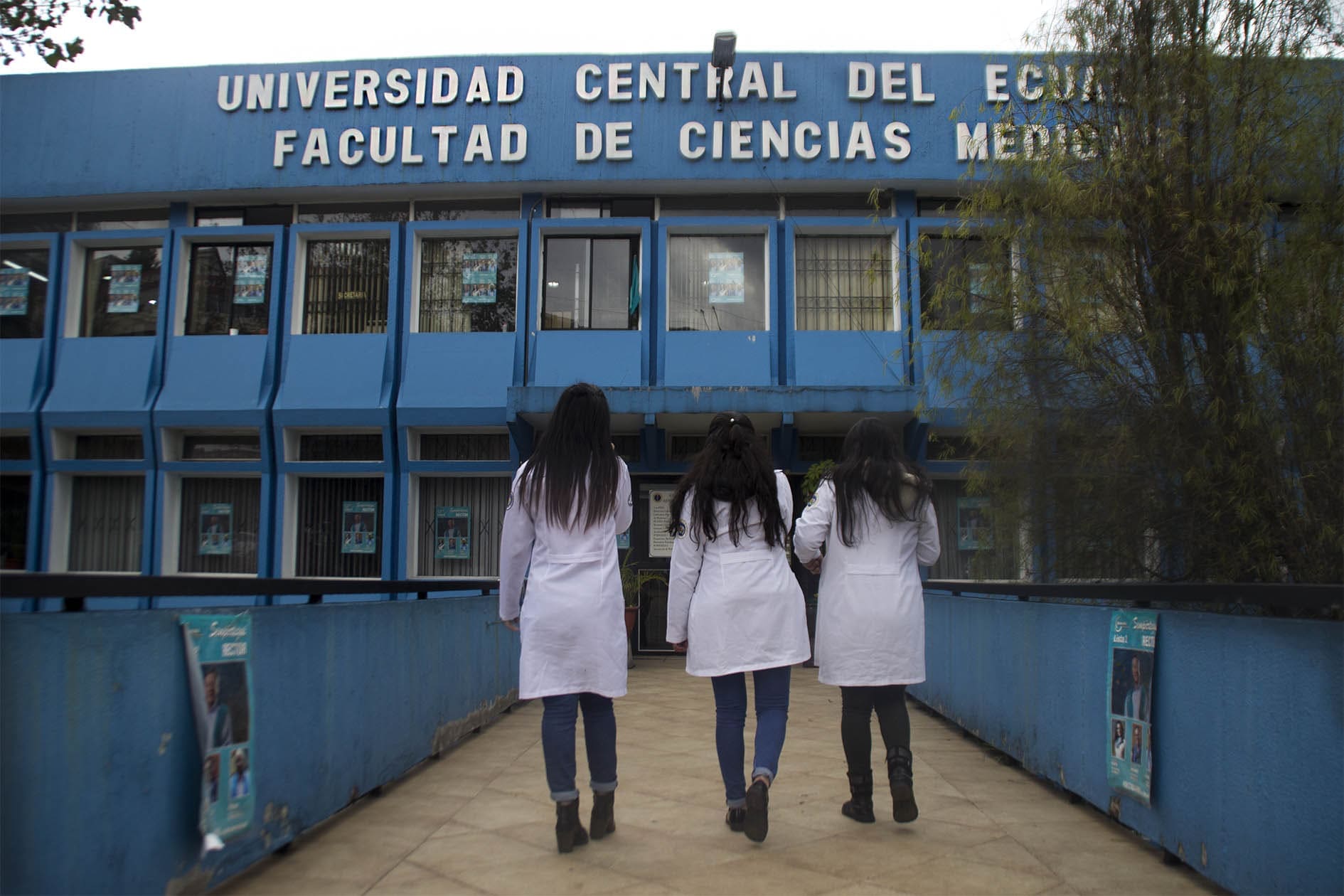
Medical students at UCE participate in academic societies, research groups, volunteer programs, and clinical outreach initiatives. The vibrant capital-city environment provides cultural, academic, and professional networking opportunities.
10) Facilities
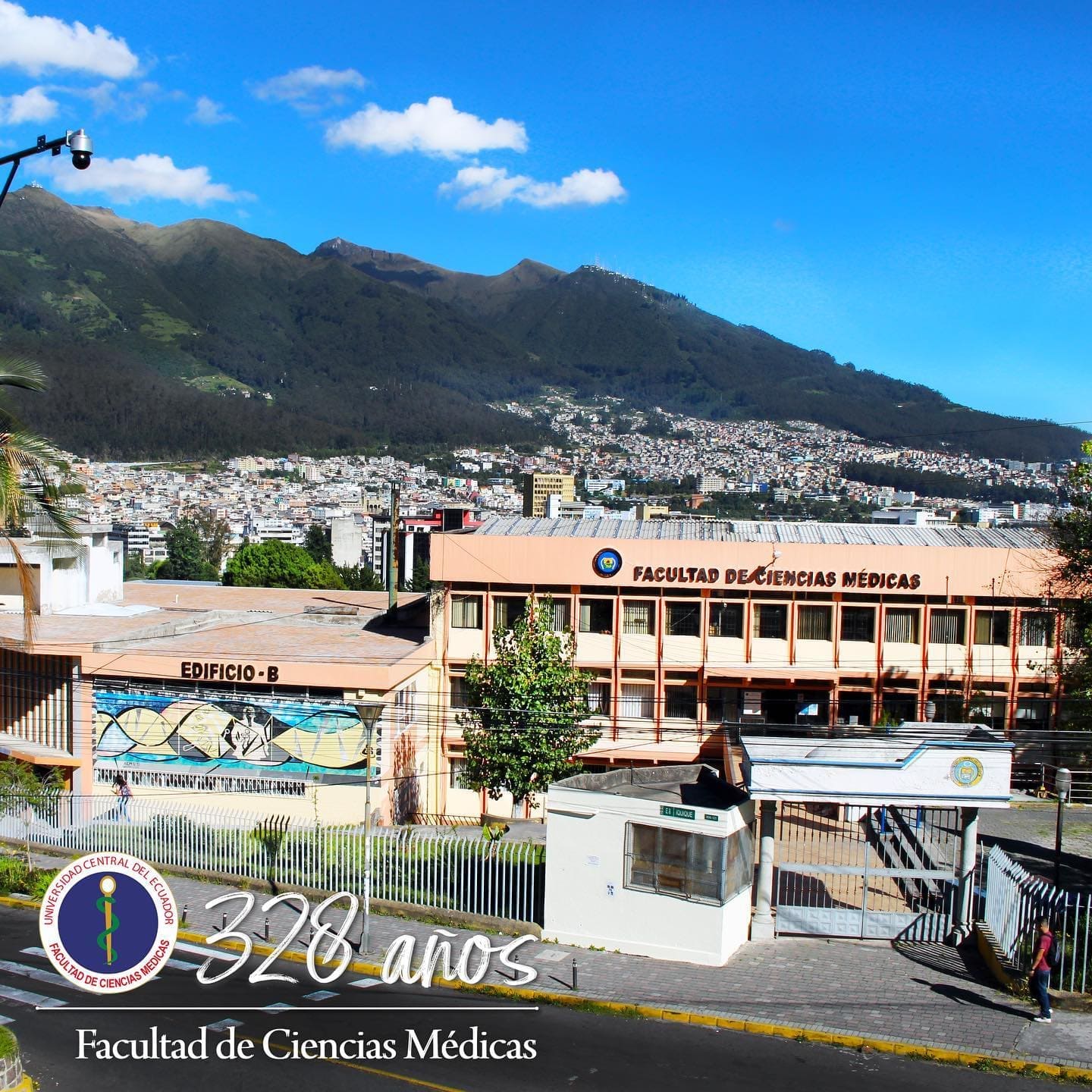
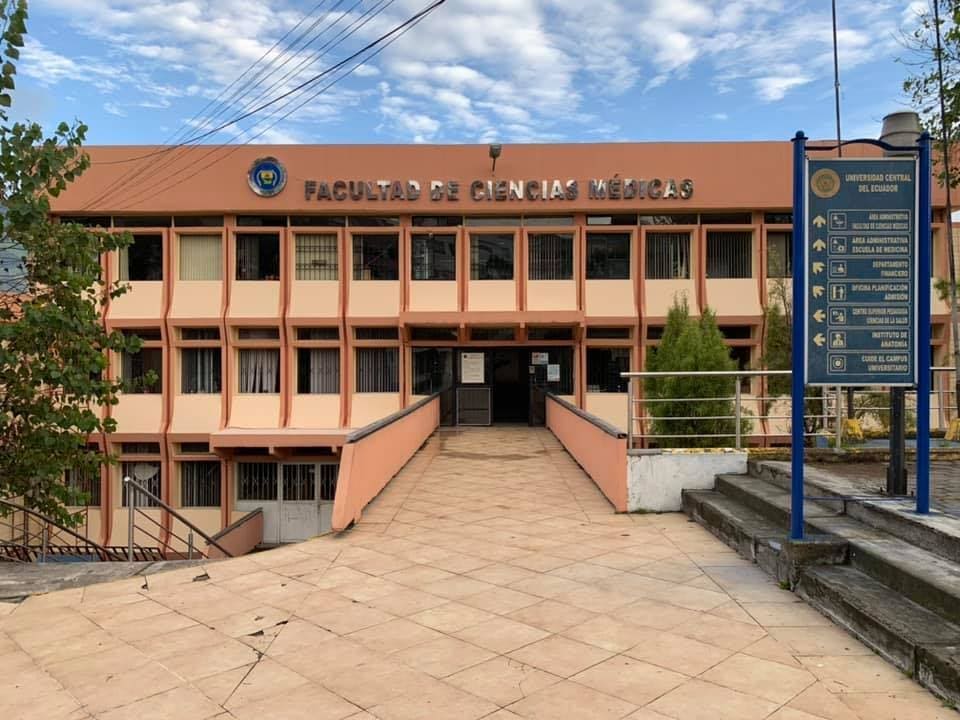
UCE provides advanced lecture halls, biomedical laboratories, simulation centers, academic libraries, and affiliations with major teaching hospitals. Facilities support comprehensive theoretical and practical medical training.
11) Graduate Outcomes
Graduates from UCE’s MD program pursue clinical practice, public healthcare roles, postgraduate specialization, and academic careers. Alumni hold leadership positions within Ecuador’s healthcare system and contribute to national medical advancement.
12) Admission Criteria
Admission requires competitive national entrance exam performance and compliance with institutional academic standards. Due to its national prestige, entry into UCE’s Medicine program is highly competitive.
13) Location
Located in Quito, Ecuador’s capital, UCE benefits from proximity to national hospitals, government health institutions, and research centers. The urban setting enhances clinical diversity and professional exposure.
14) Data Transparency
Universidad Central del Ecuador (UCE) is initially compliant with UniEv® Ranking standards. Institutional statistics are reviewed and updated every January. Any deficiency, inconsistency, or manipulation of data results in removal from the UniEv® platform to preserve transparency and ranking integrity.
Comments are closed.