

Payment
Application Fee: 105 USD (Taxes Included)
3,360 $ per year
800 $ per year
336 $ per year
832 $ per year
84 $ per year

University performance analysis
This visual analysis summarizes key academic, research, financial, and global indicators using the official UniEv® evaluation methodology.
The radar analysis highlights Faculty Capacity as a primary strength, reflecting strong alignment with UniEv® academic benchmarks. Conversely, Cost Efficiency shows relative development potential, indicating a strategic area for improvement to enhance competitiveness, student experience, and long-term global positioning.
Global performance comparison
This comparison reveals how the university aligns with global academic benchmarks. Performance strengths and gaps are highlighted to support informed student decisions and strategic academic positioning.
Tuition value & student diversity
These insights help applicants evaluate academic return on investment and understand the university’s international exposure.
Tuition vs Academic Value
Student profile distribution
Ranking Criteria
UniEv® Rank
Global: 73
Africa: 3
Egypt: 3
Cairo: 3
1) Accreditation
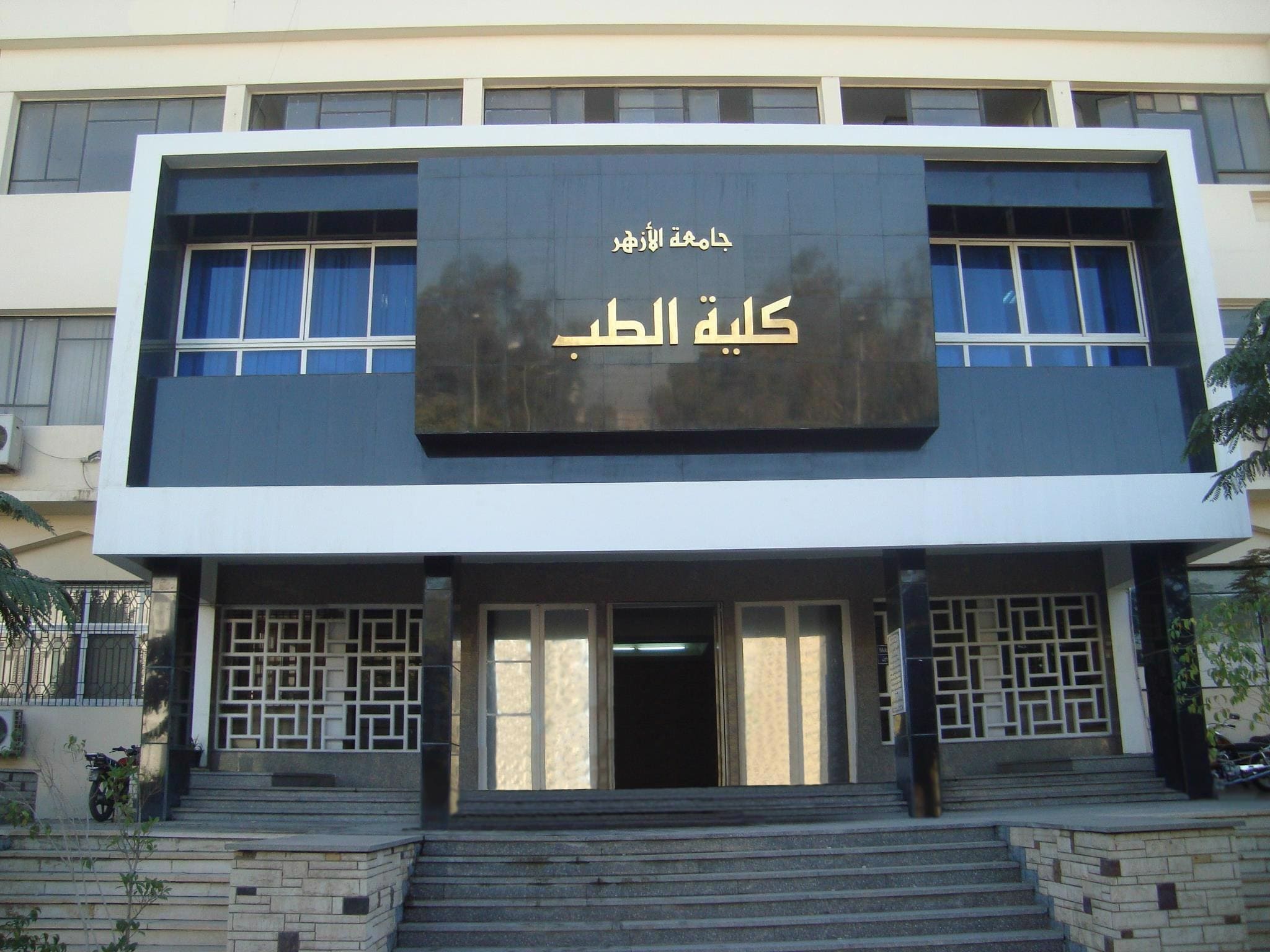
Al-Azhar University Faculty of Medicine is a public medical school accredited by Egyptian national higher education and health authorities. The faculty operates within the WFME-aligned national medical education framework, enabling graduates to pursue international recognition pathways including ECFMG eligibility. As part of one of the world’s oldest universities, Al-Azhar Medicine holds strong institutional legitimacy at national and regional levels.
2) Quality of Education
The faculty delivers a traditional medical curriculum integrating basic sciences, clinical medicine, and ethical foundations. Instruction is primarily conducted in Arabic for clinical practice, with English used for medical sciences and references. Academic rigor is moderate, suitable for large-scale medical education, and designed to meet national healthcare workforce needs.
3) Clinical Training
Clinical training is conducted through Al-Azhar University Hospitals and affiliated public hospitals in Cairo. Students receive extensive exposure to internal medicine, surgery, pediatrics, obstetrics, emergency medicine, and general practice. High patient volume ensures strong practical experience, particularly in common and complex clinical cases.
4) Faculty
The faculty includes approximately 2,500 academic staff members, comprising professors, associate professors, and clinical instructors. Many faculty members are senior consultants within Egypt’s public healthcare system, contributing to applied clinical education and supervision.
5) Research
Research output at Al-Azhar Faculty of Medicine is moderate and steadily growing. Research areas include clinical medicine, public health, infectious diseases, pharmacology, and applied biomedical studies. The faculty supervises a large number of postgraduate theses and clinical research projects annually.
6) Rankings
Al-Azhar University’s global ranking reflects its broad academic scope rather than specialization in medicine alone. Ranking improvements are gradual, driven by increasing research output and international collaboration, while the faculty maintains a stable national position.
7) Tuition
Tuition fees are among the most affordable in Egypt for medical education. Incremental increases have occurred to support infrastructure development and faculty expansion, but overall costs remain accessible compared to international standards.
8) Cost of Living
Cairo offers a low cost of living for students. Affordable housing, transportation, and food options make Al-Azhar an economical choice for medical education. University accommodation further reduces expenses.
9) Student Life
Student life is academically demanding due to large class sizes and clinical responsibilities. Religious, cultural, academic, and volunteer activities are prominent, reflecting the university’s traditional identity and community engagement.
10) Facilities
Facilities include large teaching hospitals, lecture halls, laboratories, libraries, and specialized medical centers. While some infrastructure is historic, clinical capacity is extensive and functionally robust.
11) Graduate Outcomes
Graduates primarily serve within Egypt and other countries in the Middle East, Africa, and Asia. Many pursue postgraduate training locally or abroad after meeting licensing requirements. Alumni presence is strong in public healthcare systems.
12) Admission Criteria
Admission is competitive for local students through national examination results. International admissions are based on academic equivalency and institutional criteria. Intake numbers are large to meet national and regional healthcare demands.
13) Location
Located in Cairo, the faculty benefits from access to Egypt’s largest healthcare network and diverse patient populations, providing broad clinical exposure across medical disciplines.
14) Data Transparency
Al-Azhar University provides essential academic and financial information through official channels. While digital transparency varies by faculty, core institutional data remains accessible and reliable.





Comments are closed.